







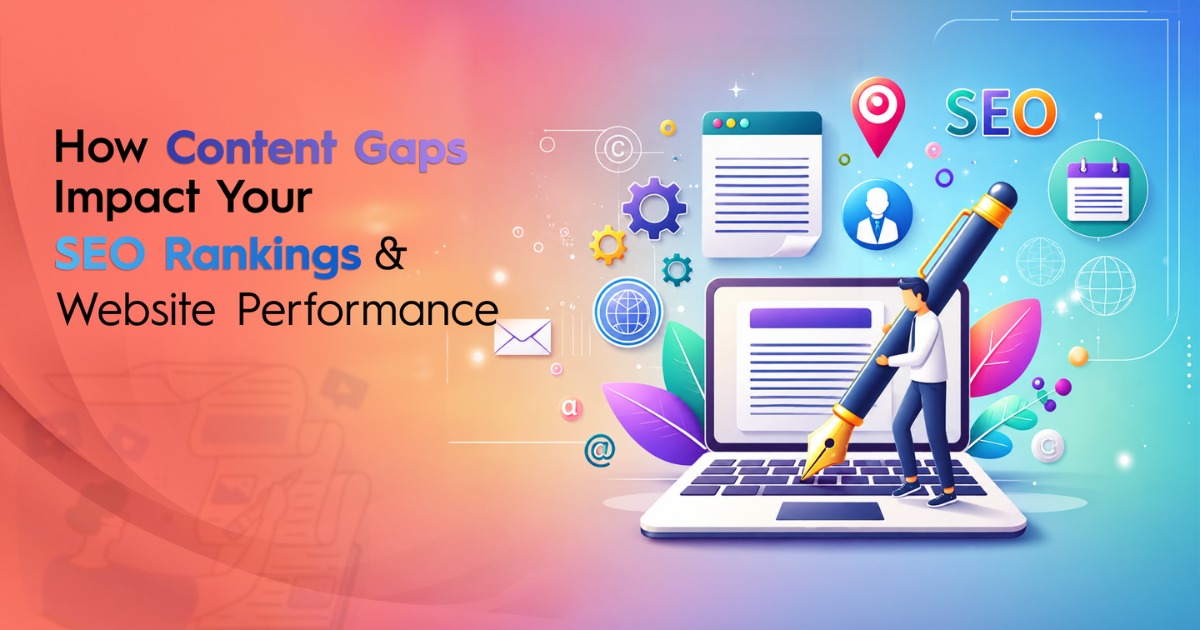
Have you ever analyzed why some websites rank higher even when your content looks just as good? The answer often comes down to content gaps: topics, questions, or details your audience is actively searching for, but your website simply doesn't cover. It's not always about writing more content either; sometimes it's about writing the right content. Left unchecked, these gaps quietly hurt your rankings, traffic, and credibility, letting competitors capture the visibility and trust that should have been yours.
What Exactly is a Content Gap?
Content gap occurs when there are differences between what consumers are looking for and what your site has to provide. Perhaps you are looking for a useful guide, or your questions have evolved, and an old post is no longer relevant. No matter which way you go, these gaps provide an opportunity to capture traffic that belongs to you. That's why content gap analysis matters. It makes you find these missing pieces before they affect your rankings.
How Content Gaps Affect Your SEO Rankings?
The content fails to address what users and search engines expect, and it creates missed opportunities that can impact your overall SEO performance. Here are four key ways content gaps can affect your rankings.
They Weaken Topical Authority
A website that has a lot of content on a given topic is trusted by search engines more than one that just has a handful of pieces. You are the expert if your competitors go deep into it and you just skim the surface.
When Google sees your competitor going in-depth, and you're just skimming the surface, they're the expert. This will make building topical authority SEO more difficult and is crucial for ranking for competitive keywords.
Fail to Match Search Intent
SEO is not simply about the keywords these days. It's all about intent. Each search has a purpose; a person wants to learn, compare, or purchase something. But when your content fails to consider user intent in SEO, people quickly bounce. SEO for search intent can help make sure you're providing the right content for people.
Increase Bounce Rates and Reduce Engagement
If the content doesn't address all of the questions, your reader will come back to Google and click on another result. This will be a silent degrading factor over time, telling search engines that your page is not the best fit.
Weaken Your Internal Linking Structure
Strong content naturally connects to other pages on your site through internal links. Content gaps break this structure, making it harder for search engines to understand how your pages relate to each other.
How to Find and Fix Content Gaps
- The first step is to conduct a content gap analysis. The first step is to go for a content gap analysis. Look at your website and other best-ranking sites and compare them. What subjects do they teach that you don't? A variety of tools, such as Ahrefs, SEMrush, or Google Search Console, can be used to identify these missed opportunities.
- Regularly monitor the performance of your site's SEO. Identify pages with a lot of impressions and low clicks. In most situations, this indicates that your articles do not match the searchers' intent. Regularly reviewing the website SEO performance will help you identify issues early.
- Consider the entire buyer's cycle. Be sure to have content for people starting with the basics of the topic, to those who are prepared to purchase.
- Make improvements to existing products. Not all the time, new content is not the answer. What you have to do is make existing pages more complete, more up-to-date, and more helpful.
Ready to Solve Content Gaps that Affect your Website?
It's surprising how easy it is to miss a frame of content, but how expensive it is to ignore it. They quietly hold back your rankings, they don't care what users want, and they cripple your topical authority even when the rest of your site is great. The great thing is that it can be done quickly; a content gap analysis will reveal these issues, and often quick wins in plain sight. Make them regularly, and you will create a website that the search engines and real people will rely on, visit, and rank increasingly.